Three flooring contractors in Philadelphia what method hardwood flooring should be installed, and you'll receive three different answers - not because they are wrong, however the correct installation method genuinely will depend on the particulars of your house. The type of subfloor, floor's level, the wood species, the conditions of moisture and your longer-term plans of the space all contribute into the decision. Most homeowners only learn this only after the fact which is why it's worth understanding the differences before you start getting estimates. This is how each method is used and when it will make sense.
1. Nail-Down is the standard for Solid Hardwood
Nail-down, also called staple-down, involves bolting every plank of solid hardwood to a wood subfloor using a pneumatic nailer. It's the oldest method and is the most frequent method of installing solid hardwood in Philadelphia houses with the plywood and OSB subfloors. The bond is strong, the floor feels solid underfoot, and there's no adhesive to fail with time. Most flooring contractors will default to nail-down for solid hardwood on subfloors made of above grade wood without thinking twice.
2. The subfloor of your home determines if nail-down is a viable option at all.
A wood floor is required for nail-down hardwood -fully stop. Concrete slabs, as seen on the ground floors of basements and in a few areas of Philadelphia homes and Delaware County ranches, cannot accommodate staples or nails in any meaningful way. If your concrete subfloor nail-down cannot be put on the table, regardless of the flooring material you're looking for. A licensed flooring installer will notice this on the spot during a visit to the site; however, an unexperienced one may not recognize it until after the job has started.
3. Glue-Down Unlocks Concrete Slab Installations
Glue-down hardwood installation utilizes the full-spread adhesive which is applied to the subfloor prior to planks being put in place. It's the best option when you're looking for real hardwood over concrete. Basements are a common option in Montgomery County colonials, ground-floor slabs that are used in newer South Jersey construction, or any other place where nail-down may not be viable. If done correctly, a glue-down flooring is extremely sturdy with minimal flex. The downside is that removal later is significantly more involved that removing a stapled and floating flooring.
4. The floating Hardwood Isn't Connected to the Subfloor at All
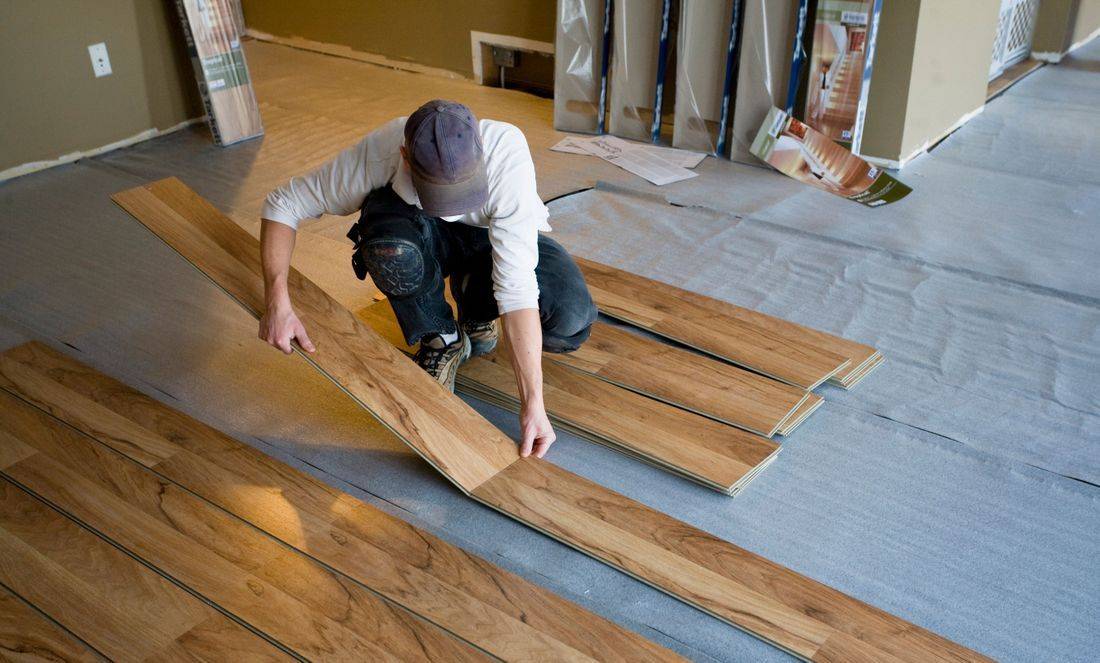
Floating installation signifies that the planks join at their edges and sit on the floor as one connected surface, moving as one unit instead of being fixed in place. It's less difficult to set up, easier to remove, and better able to withstand subfloor imperfections than nail-down. Engineered hardwood is by far the most popular type of floating flooring in Philadelphia as its layered structure can handle the slight sway caused by floating more effectively than solid wood.
5. Floating floors give you a distinctive feel beneath your feet
This is something that visits to showrooms don't always convey. Floating hardwood exhibits a slight give when you walk on it. It's nothing dramatic but noticeable when you compare it to a nail-down floor that's locked in place to the floor. Most homeowners find it a thing of the past. Certain homeowners, particularly those moving from nails-down hardwoods, it's an adjustment. If you're worried would like to know more, ask your flooring specialist for an unfinished floor prior to signing.
6. Nail-Down represents the highest labor price of three
From an installation standpoint nail-down hardwood demands more time and effort which is reflected in the labor rates you'll see from Philadelphia flooring contractors. The subfloor has to be neat straight, flat, and thick. Planks must be acclimatized. Nailers require careful technique in order to avoid splitting. Flooring contractors who nail down correctly are earning money. If you're offered a low hardwood installation cost is worth asking how they plan to attach it.
7. Glue Down increases material costs but it also reduces the need for some labor Variables
Adhesive isn't cheap, for glue-down jobs, you need the right product matched to the hardwood and subfloor combination. It is true that installing glue-down over a concrete slab properly prepared will be faster than nailing over subfloors in need of substantial repair. Flooring contractors across Bucks County and Delaware County generally recommend glue-down on engineered timber in slabs-on-grade construction in particular because it provides real wood beauty with practical advantages.
8. The Moisture Test should be performed prior to any method is chosen.
This step is sometimes skipped in budget jobs and creates problems in the course of a year. Concrete slabs are known to emit moisture-vapor and excessive moisture could cause glue-down adhesives to fail the floating floor to buckle. Wood subfloors in older Philadelphia rowhomes can contain high levels of moisture from crawl spaces or poor ventilation. A thorough moisture test prior to installation isn't optional -it's how a skilled flooring contractor determines which method is safe, as well as which preparation work is required before.
9. Refinishing Compatibility Variates based on Method
Solid hardwood nail-down may be sanded, refinished and refinished many times over its lifespan- it's one of strong arguments to consider regardless of the cost of installation. Engineered wood that has been glued down is typically able to get refinished either twice or three times according to the thickness of the wear layer. Floating engineered hardwood may offer a limited refinishing opportunity. If long-term maintenance of your wood floor is on your list of priorities, factor this into the choice of method prior to installation, not later.
10. The Correct Method Is A Site Decision, Not a Preference Decision
Homeowners often come to flooring consultations having a specific thought about the kind of installation they want. Experienced flooring installers in Philadelphia will gently redirect that discussion towards what the particular home's needs are. They're not soliciting a certain way of doing things -they're analyzing your subfloor, the moisture levels and floor level in addition to your species of wood, and then recommending the best option. This specific site-specific evaluation is the thing that separates a professional licensed and someone who owns nailers. Have a look at the most popular
flooring contractors Bucks County for site tips including laminate flooring installation Philadelphia PA, subfloor repair Philadelphia, hardwood floor refinishing Philadelphia, hardwood floor installation cost Philadelphia, laminate flooring installation Philadelphia, free flooring estimate Philadelphia, hardwood flooring Philadelphia, solid hardwood floor installation Philadelphia, luxury vinyl flooring Philadelphia, solid hardwood floor installation Philadelphia and more.
How to Find Licensed Flooring Contractors In Philadelphia
Finding a flooring contractor in Philadelphia is simple. Finding a registered, insured proficient one that can be available for contact six months later if problems arise -- this is the part that requires real effort. The Philadelphia metro is home of a vast variety of flooring installers established companies with years of local work and legitimate independent contractors with experience, and numerous unknown outfits that compete on price alone and vanish when problems occur. Bucks County, Montgomery County, Delaware County, and South Jersey all have their respective local contractor ecosystems, with the same quality. Here's how you navigate it without learning it the hard way.
1. Know what the term "licensing" actually means in Pennsylvania
Pennsylvania will require home renovation contractors, which includes flooring installers -- to register to the Attorney General's Office under the Home Improvement Consumer Protection Act. This is different from a trade license and it's the legal minimum, that is not a symbol of exemplary quality. Any flooring company operating in Philadelphia or nearby counties that is not registered with this registration is already operating illegally before they've ever touched your flooring. You can verify registration status via the Pennsylvania Attorney General's website prior to when the contractor can enter your home.
2. Insurance is non-negotiable. It's also easy to confirm
General liability insurance shields your home if a contractor has a problem with it during the construction. Workers' compensation insurance protects you from liability if a worker is injured while working. All of them must be current, and verified. Ask any flooring contractor whom you're interested in hiring proof of insurancethey should not lie and claim that they've got one, but a real certificate that includes the insurer's name and policy number. Companies that are trustworthy pull these documents regularly and never delay in requesting it. Contractors who don't comply or stall on this issue are telling you something important.
3. Local Reviews Tell You Much More Than Star Ratings
A flooring contractor with an 4.8 score and 200 customer reviews from Google is a more reliable signal than one that has ratings of 5.0 rating and only 11 review. Take a look at the content of reviews and not just their stars. Particularly look for references to the process used to resolve problemsall contractors have jobs that don't work out perfectly, but the ones you should hire are the ones who showed up, communicated, and fixed the issue. Philadelphia flooring reviews that include particular neighborhoods, floor types as well as the project's outcomes are more reliable than the generic 5-star ratings. You can cross-reference Google, Yelp, and the BBB to get a greater picture.
4. Find out more about the experience of Your Floor The type
Flooring isn't an exclusive trade. For a contractor, who's installed LVP in 500 homes might not have the experience of nail-down solid hard wood, glue-down engineered wooden hardwood over concrete or large-format porcelain tile. If you're looking at estimates for hardwood flooring installation in Philadelphia You should ask them directly what number of similar projects they've carried out in the last period of time and if they're able to seek out a reliable reference. Contractors that are confident in their skills and experience will be happy to answer. Anyone who does not respond with generic explanations are worthy of being scrutinized more carefully.
5. The Free Estimate Visit reveals More than the Quote
Each reliable flooring contractor in Philadelphia will give you a free estimate that requires them to visit your home. The quality of their visit that is how thorough they examine the subfloor, whether they request information on the history of moisture or how clearly they explain their scope you more about the service than what they write down in the final report. A contractor who takes 45 minutes assessing the space and asks detailed questions is different from one who is in the room, measures the room and then gives the client a number within ten minutes without looking at anything below the current surface.
6. Make sure you get three itemized quotes before Determining Anything
Three quotes is the minimum required for any flooring installation project in Philadelphia that is of a significant size. But more important than that total is the actual value of each quote. includes: subfloor preparation demolition and removal of materials, transition strips, baseboards furniture movement, and post-installation cleanup. Quotes that state a simple price per square foot with an additional breakdown do not allow for you to investigate additional items later mid-job, when you have less leverage. Quotes that include itemized information allow you to compare companies on a level playing field rather than comparing one's all-in rate against another's floor number.
7. Neighborhood Reputation is Still a Real Weight in Philadelphia
The Philadelphia metro -- the city neighbourhoods, inner-ring suburbs and counties that extend to Bucks and Delaware is a place that relies on relationships and still has a significant impact for trades work. If you ask your neighbors, block associations or local Facebook groups about the people they've relied on for flooring for their homes the results that no search engine results. A flooring contractor who did a great job on your street or in your township has a local reputability to protect in a manner that a company from across the entire region cannot. This referral network, which is informal, is underused and genuinely valuable.
8. Pay attention to the patterns Unlicensed Operators and Share
Certain behaviours are seen in contractors who have cut corners on insurance and licensing. Pay with cash only. Reluctance to provide a written contract. Quotes given verbally without any in writing. No physical business address, only a cell number. A deadline to resolve the issue before the price is changed. Subcontractors who show up on installation day who you've never met and that weren't included in the estimate. They're not absolute, but several of them ought to prompt you to update your list with vetted flooring contractors.
9. Cross-County Searches Expand Your Options without sacrificing quality
Some of the best flooring installers that serve Philadelphia properly are based out of Montgomery County, Delaware County as well as South Jersey and work across the metro area regularly. Limiting your search to Philadelphia-based contractors could limit your options. What matters is their familiarity specifically with the Philadelphia housing stock (rowhomes and older subfloor conditions, common moisture challenges -- not the side of the city line they are on. In the end, a Bucks County flooring contractor with good Philadelphia testimonials is worth calling.
10. A written contract protects both Parties and Defines the Job
Before any work is started, you must have a written agreement that defines the flooring material including brand and product name in addition to the method of installation and the amount of subfloor prep as well as the cost schedule, project timeframe, and what happens should subfloor damage is discovered during the course of work. Flooring contractors who are licensed use contracts for their work as a common procedure. It's not a sign of distrust -- it's the document that helps keep the good relationship between them should anything unexpected occur during the period between the start to install and final walkthrough. Take a look at the best Read the best LVP floor installation cost Philadelphia for blog tips including bathroom tile installation Philadelphia, floor sanding and refinishing Philadelphia, flooring installation Montgomery County PA, floor sanding and refinishing Philadelphia, floor installation Delaware County PA, flooring installation cost Philadelphia, flooring installers Philadelphia, laminate flooring installation Philadelphia PA, custom hardwood staining Philadelphia, porcelain tile installation Philadelphia and more.
